You planted the trees, laid the patio, and maybe even put in a pool years ago, yet something about your backyard still feels incomplete. This isn’t unusual, and it isn’t your imagination. Most backyards evolve piecemeal over the years, with each addition solving one problem while quietly creating another. Understanding the specific gaps that accumulate over time is the first step toward finally getting a yard that feels cohesive instead of like a collection of unrelated projects.
Missing Structure and Overall Design Flow
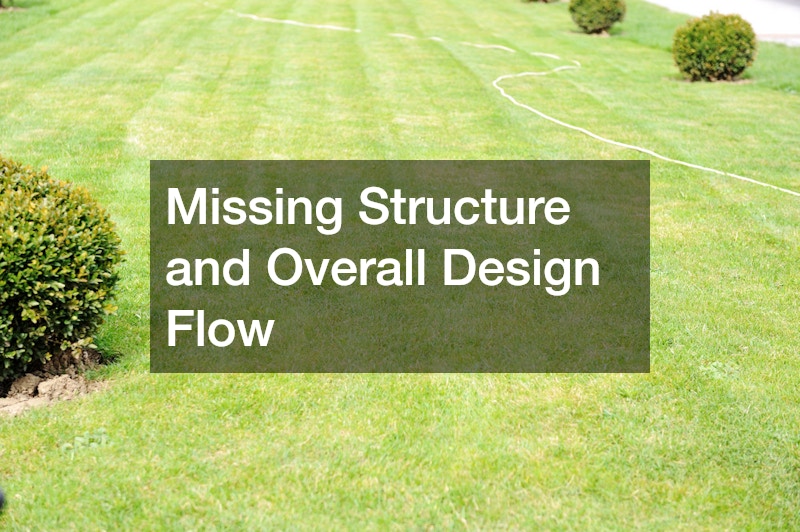
One of the biggest reasons a backyard feels unfinished is that it was never designed as a whole in the first place. Homeowners often add a patio one year, a garden bed the next, and a swing set after that, without ever stepping back to consider how these pieces relate to each other. The result is a yard that functions but lacks any sense of intentional flow between spaces.
Bringing in local landscape designers, even for a single consultation, can help you see the bones of your property in a new way. They look at sightlines, traffic patterns, and how sunlight moves across your yard throughout the day, then suggest ways to tie existing features together instead of starting from scratch. Sometimes the fix isn’t more additions but rearranging what you already have.
Aging Fences and Outdated Pool Barriers
If you have a pool, the barrier around it does more than mark a boundary; it’s a safety feature that also shapes how the whole backyard reads visually. Older fence for pools installations often used chain link or basic wood pickets that have since faded, warped, or fallen out of code compliance in many areas. A tired, mismatched barrier can make even a beautifully maintained pool area look neglected.
Upgrading to a modern, code-compliant enclosure can transform the entire feel of the space. Many homeowners now choose transparent glass panels or powder-coated aluminum for a cleaner look that doesn’t block views of the water. If your pool area still has the original barrier from installation day, it’s worth asking whether it’s still doing its job both functionally and aesthetically.
Overlooked Entry Points and Gate Hardware
Entryways are one of the most under-considered parts of a backyard, yet they set the tone before a visitor even steps onto the lawn. A rusted latch, a sagging gate, or mismatched hardware between the front and back of the property can make the whole yard feel disjointed. These small details are often the last thing homeowners think to update, even after larger renovations.
An iron gate at the entrance to a garden or pool area can serve as a real focal point rather than just a barrier. Beyond the visual upgrade, wrought iron and steel options tend to hold up better against weather than wood, meaning less warping and fewer repairs down the line.
- Check that hinges and latches operate smoothly without forcing
- Match gate style to the home’s architecture, not just the fence
- Consider self-closing hardware near pool areas for added safety
- Look for powder-coated finishes to resist rust in humid climates
Deteriorating Patios, Walkways, and Ground Materials
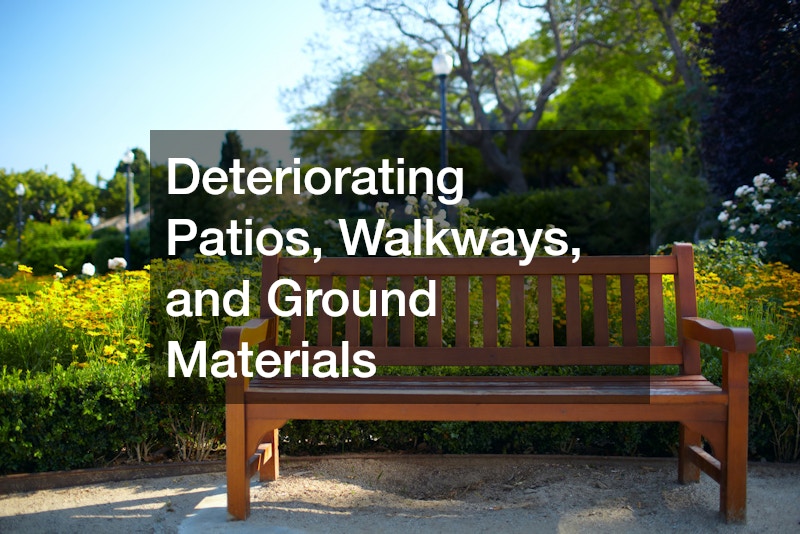
Concrete cracks, pavers shift, and gravel paths scatter over time, and these ground-level issues are often the most visible sign that a yard needs attention. Because these surfaces take the most daily wear, from foot traffic to weather exposure, they tend to show age faster than plantings or structures. A cracked walkway can make an otherwise updated backyard look tired.
When it’s time to refresh these areas, the choice of landscape materials matters as much as the layout itself. Natural stone, permeable pavers, and decomposed granite each bring a different texture and maintenance level, so it helps to think about how the space is actually used before choosing. A well-matched material palette across the patio, paths, and garden borders is often what makes a yard finally feel pulled together.
Sloped Yards and Unaddressed Drainage Problems
A sloped or uneven backyard is one of the most common reasons a space never quite feels finished, because water runoff and erosion quietly undermine everything built on top of it. Even a slope of just 2-3% — barely noticeable to the eye — can direct hundreds of gallons of runoff toward your house during a heavy rain. Over years, soil shifts, plants struggle in overly wet or dry patches, and pooling water near the foundation can lead to bigger structural issues like cracked concrete, basement seepage, or a sinking patio.
The signs are often subtle at first: grass that stays soggy for days after rain, mulch that washes away from flower beds, or mysterious low spots that seem to reappear no matter how much soil you add. Mosquitoes breeding in standing water and a musty smell near the foundation are other telltale clues that drainage, not landscaping, is the real culprit.
Many homeowners live with this for years without realizing there’s a straightforward fix. Solutions like French drains, dry creek beds, swales, or properly graded soil can redirect water away from the house and toward a safe discharge point. Even smaller interventions — extending downspouts, adding a catch basin, or regrading a section of lawn to slope away from the foundation — can make a noticeable difference without a full-scale excavation project.
Retaining walls solve two problems at once: they manage water flow and create usable, level space out of a slope that was previously wasted. Without one, rainwater simply follows gravity, carrying topsoil, mulch, and grass seed downhill until you’re left with bare patches at the top of the yard and soggy, eroded low spots at the bottom. A properly engineered wall interrupts that flow, redirecting water through gravel backfill and drainage pipe instead of letting it run wild across the lawn.
The height and material of the wall matter more than most homeowners realize. Walls under 3 feet can often be built with segmental concrete block or natural stone as a straightforward weekend-scale project, while anything taller typically requires engineered footings, reinforcement, and sometimes a permit depending on local codes. Cutting corners here is a common reason walls fail within a few years, bulging or leaning as saturated soil pushes against them.
Beyond function, a well-built wall can double as seating, garden framing, or a natural transition between different zones of the yard. A 16 to 18-inch-high wall, for instance, sits at a comfortable seat height and can wrap a patio or fire pit without needing extra furniture. Terracing a steep slope into two or three shorter walls, rather than one tall one, also tends to look more natural and spreads the drainage workload across multiple levels.
This is often the missing piece that turns an awkward, sloped lawn into a series of intentional outdoor rooms, each with its own purpose and its own water management built in from the start.
Old or Missing Outdoor Living Structures
A backyard without a defined gathering space often feels like it’s missing a heart. Lawn alone doesn’t give people a reason to linger, and without a raised platform or defined seating area, outdoor furniture tends to look temporary rather than intentional. This is especially true in yards where the only “structure” is a rusting grill and a folding table.
Working with a qualified deck builder can add exactly the kind of anchor point a yard needs, whether that’s a simple platform off the back door or a multi-level structure that steps down toward the lawn. Modern composite decking also means less annual maintenance than the wood decks many homeowners grew up with. A well-placed deck often becomes the single feature that makes the rest of the yard’s design decisions make sense.
Neglected Trees and Overgrown Canopy Cover
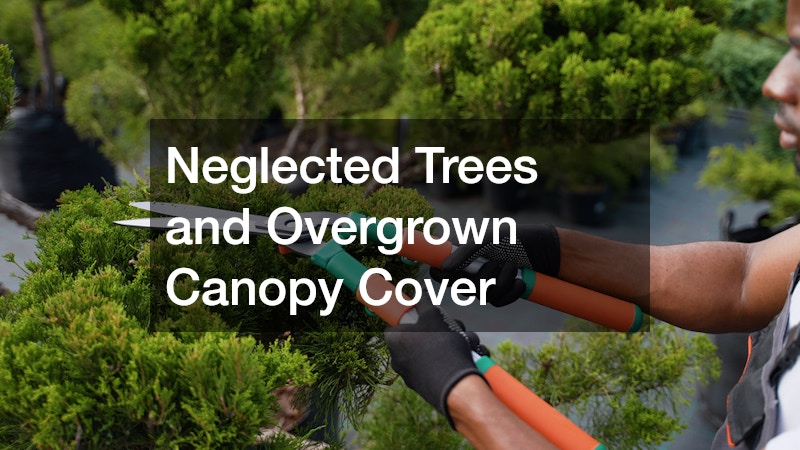
Trees planted years ago as small saplings have likely grown into a completely different presence in your yard, and not always in ways that were planned for. Overgrown branches can block sunlight from grass and garden beds, while root systems may start interfering with patios, fences, or underground pipes. What once felt like a nice shade tree can become the reason nothing else in the yard thrives.
Routine tree trimming keeps canopy growth in proportion to the rest of the yard and prevents branches from becoming safety hazards during storms. In cases where a tree has outgrown its space entirely or shows signs of disease, tree removal may be the more responsible choice, even though it’s a harder decision for homeowners attached to a mature tree. Either way, addressing overgrown trees is often the fastest way to bring light and proportion back to a yard that feels dark or crowded.
Unresolved Pest Activity Beneath the Surface
Some of the reasons a backyard feels off aren’t visual at all. Ants, termites, and rodents often set up shop in mulch beds, woodpiles, or under decking without any obvious sign until damage is already underway. A yard that looks fine on the surface can still have real, ongoing threats to structures and plant health.
Bringing in a pest control company for an annual inspection is a small step that prevents much larger problems, particularly for wood structures like decks, fences, and gates. Termite damage in a support post or fence rail is far more expensive to fix after the fact than to prevent with routine treatment. This kind of maintenance rarely shows up in before-and-after photos, but it’s often what protects everything else you’ve invested in.
Pools That Were Never Fully Integrated Into the Landscape

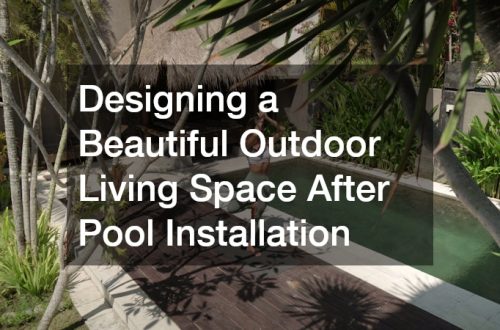
A pool installed in isolation, without much thought to the surrounding hardscape or planting, tends to look like exactly that years later: an addition rather than a feature. Bare concrete decking, minimal landscaping, and awkward transitions between the pool area and the rest of the yard are common results of a pool project that focused only on the water itself.
This usually happens because pool budgets get consumed by excavation, plumbing, and the shell itself, leaving little left for the surrounding design. Homeowners are told the “extras” like coping upgrades, decorative decking, and planting beds can wait until later. Later rarely comes, and the yard is left with a functional pool that reads as a separate project bolted onto the lawn.
The visual disconnect shows up in specific ways: a plain broom-finished concrete slab that stretches uninterrupted from the pool edge to the fence line, chain-link or basic aluminum fencing required for safety code but never dressed up, and grass that abruptly meets pavement with no border, planting strip, or gradual transition to soften the line. Lighting is another common gap — a pool with underwater illumination but no path lighting or landscape lighting nearby can feel like a spotlighted island at night.
Over time, these gaps become more noticeable rather than less. Landscaping matures around the rest of the yard while the pool area stays static, widening the contrast between the “finished” parts of the property and the pool zone that never got the same attention.
Many pools were installed decades ago by a contractor focused solely on the excavation and structure, with little thought given to how the space around it would eventually be used. The result is often a slab of concrete or a small ring of pavers surrounded by plain grass, with no transition between the pool and the rest of the yard. Over time, this gap becomes more noticeable as the rest of the landscaping matures and the pool area starts to look stuck in the past.
Revisiting the space with a pool company that also considers surrounding design can help integrate the pool into the broader yard rather than leaving it as a standalone feature. This might mean softening hard edges with plantings like ornamental grasses or low shrubs, adding shade structures such as pergolas or cantilevered umbrellas, or reworking the decking material to match the rest of the property. Even small changes, like swapping cracked concrete for travertine or wood-look pavers that echo the patio elsewhere in the yard, can make a noticeable difference.
Lighting is another area worth revisiting, since older installations often relied on a single spotlight or none at all. Adding pathway lighting, underwater fixtures, or accent lighting along nearby plantings can tie the pool into evening use of the yard rather than leaving it dark and disconnected once the sun goes down. A pool that feels connected to its surroundings, rather than dropped into the middle of the lawn, goes a long way toward making the whole backyard feel resolved.
An unfinished-feeling backyard is rarely the result of one big mistake; it’s usually the accumulation of small, overlooked details across years of piecemeal projects. The good news is that each of these gaps, from tired fencing to overgrown trees to drainage issues, can be addressed individually without a full teardown. Start by walking your property and honestly noting which of these areas feels neglected, then tackle them one at a time or bring in the right professional for each piece. With a bit of focused attention, that lingering sense of incompleteness can finally give way to a yard that feels whole.